
What does a 2516-year-old race teach us in the age of AI?
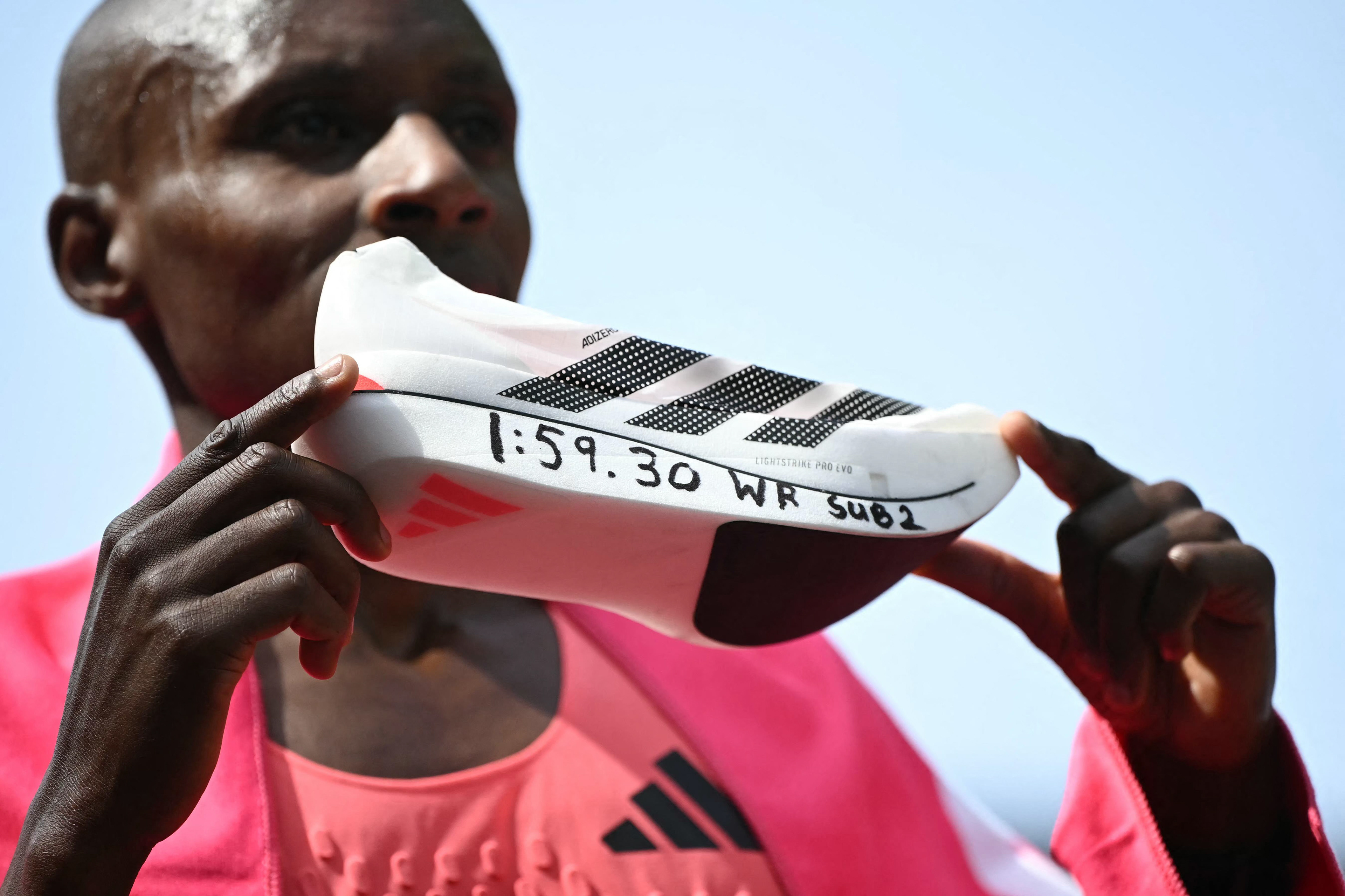
Sabastian Sawe - London Marathon (Source: Adidas)
At the end of April, an unbreakable barrier in sports was shattered: Sabastien Sawe ran a sub-2 Marathon. Not only he, but also Yomif Kejelcha managed to achieve this breakthrough. Plus, Tigst Assefa also broke the women’s WR. What’s common in all three of them? They all wore Adidas’s new shoes.
Although Kosárérték (where this article was originally posted) is an e-commerce magazine, this time we must take a slight detour into sports history. In Marathon running, there was a barrier that seemed unbreakable: the sub-2-hour race. True, in 2019 Eliud Kipchoge ran 42.2 kilometers in 1:59:40, but that wasn’t an official race, so it’s not an official world record.
This year’s London Marathon, however, was a real race. And the results are groundbreaking: Sabastian Sawe came first with 1:59:30, while Yomif Kejelcha was second with 1:59:41. Both of them broke the previously unreachable time. What’s more: Tigst Assefa won the women’s race with a WR of 2:15:41.
What does this have to do with e-commerce? At first, seemingly nothing. But when all we hear about how AI is taking over the role of humans in commerce, it’s worth having another look.
The internet exploded after the records
The runners overtook the news cycle for a while, which isn’t too surprising with such huge records. What’s slightly more interesting is that the Adidas supershoes that (partly) enabled this record also got quite a bit of attention. The sub-100 gram Adidas Adizero Adios Pro Evo 3 were tested, for example, by The Guardian.
But the shoes performed exceptionally well on Reddit as well, which is a favorite source for almost every AI model. (According to Semrush, only Wikipedia can compete with Reddit when it comes to LLM sources.) On r/RunningShoeGeeks, the new Adidas shoes definitely got a decent amount of attention. What’s more, they also invited Adidas Running's Patrick Nava for an AMA.
They talked about the build, the performance, and, of course, the eyewatering $500 price tag of the shoes. But what’s even more important is: Adidas and Sawe set the agenda for days and weeks among runners.
Humans are valorized
This once again shows that it doesn’t matter how much AI we have in our lives, we need humans to advertise products. Or, as Nikola Ilchev, the founder of Balkan eCommerce Summit, said in my recent interview with him: for certain products, "I will need a personal presence, human interaction, or at least the word of an influencer I find reliable (…) this need will change online (and omnichannel) commerce and social media content and advertisements too."
He concluded: "I think AI won't conquer everything; in fact, human interactions will become more valuable and relationships between people will be much more important in commerce as well."
The results of the three runners are a great example for this: it doesn’t matter how much Adidas would’ve tried to push the product purely with AI, it needed real athletes to achieve (marketing) success. Just as well, they needed real users on Reddit and YouTube who wanted to talk about their products. They also need trustworthy websites like RunRepeat, which reviewed their shoes as soon as it was possible.
Where can AI help, then? And where can it hurt?
As most of us have learned by now, two things can be true at once. That statement is also true for the ever-growing presence of AI and the simultaneous valorization of humans. Recently, Kosárérték’s resident author, László Vecsei, also wrote about the topic. In his opinion, AI can do a lot of heavy lifting in automating background processes, scaling product descriptions, or performing some translation tasks.
Interestingly enough, he doesn't mention product photos among these tasks, even though photo generation is one of the most heavily promoted use cases for Al. However, there are signs showing people don't really like AI-generated images. According to a study published in 2023, plenty of people react badly to "Al Art" because they miss the human touch of it. In 2024, Getty Images came out with its own study, stating that:
- 90% of the customers would like to know if an image is AI-generated
- 94% of them believe that real photos build trust
- 87% said that authenticity is important.
Canva’s study from 2026 uncovered similar sentiments: 70% of the users notice if an ad is AI-Generated, because they are "missing their soul".
Of course, even brands like Adidas use AI-generated product photos. However, many users were not keen on them for the reasons listed above.
Where do we go from here?
AI is here to stay, there’s no question about that. It can surely take over areas like automation, grammar and tone check, kick-off brainstorming, and the list goes on. And we didn’t even get into the possibilities of agentic commerce, which could upend traditional e-commerce.
But appearing in these LLMs will require authentic sources, like Reddit (even if that sounds funny to some), good, trustworthy review sites, and, most of all, real athletes winning in real shoes. Exactly how the Adidas example showed us.
People will be in the center. No wonder, apart from AI, the importance of influencer marketing is still growing. According to Statista, the global influencer market size was $16.4 billion in 2022 and reached $32.5 billion by 2025. Of course, AI found its place in this area too, but not with "virtual influencers," which were not much more than a short-lived curiosity. Instead, AI helps marketers to find influencers who are a good match for their brands. Because today, finding the right people is the most important.
The direction seems clear: real people are selling products to real people. With the help of AI.
###